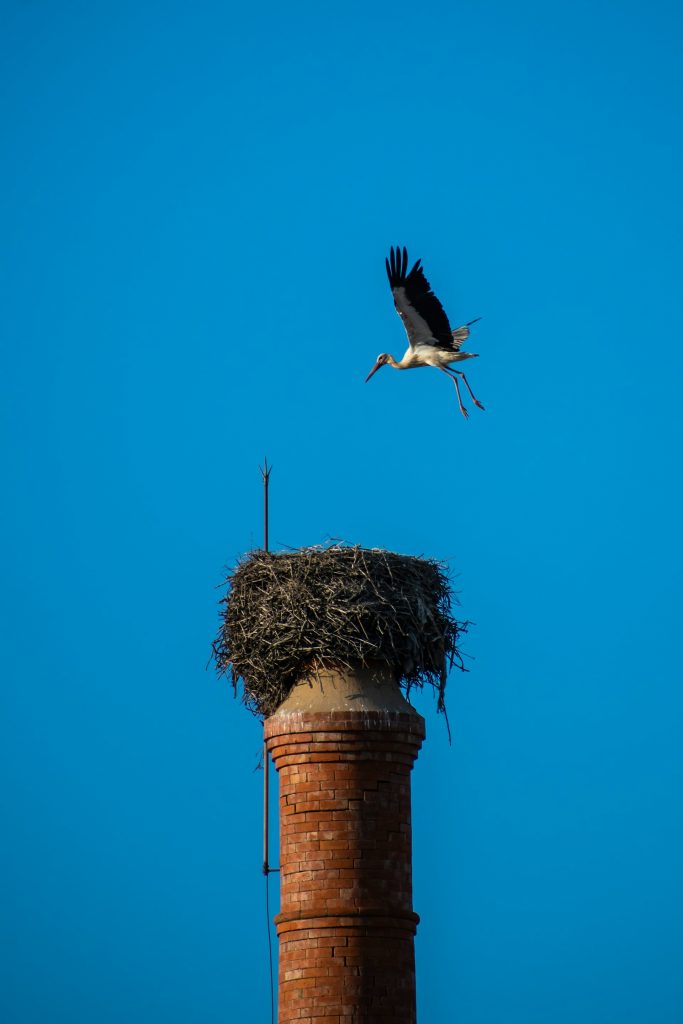
If you’ve spent any time in the Algarve, you’ve probably noticed them: tall, elegant birds (storks) perched on rooftops, church spires, chimneys, and even traffic lights… standing proudly in their giant, twiggy nests as if they own the town.
These are white storks (cegonhas-brancas), one of the Algarve’s most beloved (and surprisingly charismatic) residents.
And once you start noticing them, you’ll see them everywhere.
A bird with a passport… that sometimes just never leaves
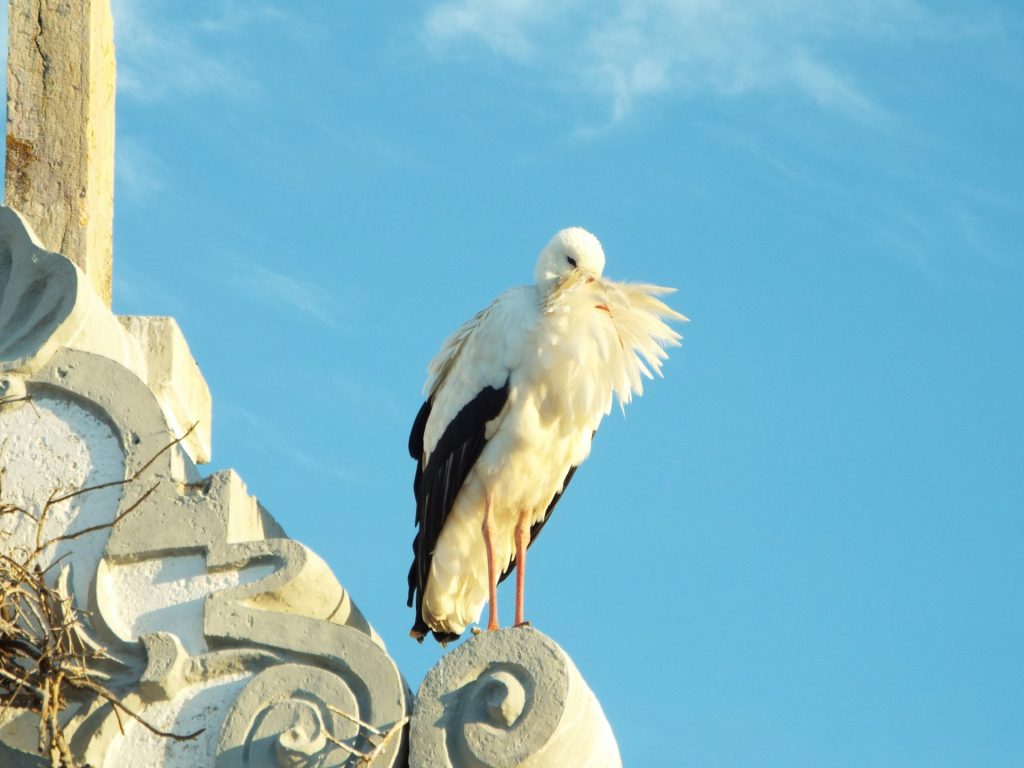
White storks are famous migratory birds, traveling thousands of kilometers between Europe and Africa. But in recent decades, something interesting has happened:
Many Algarve storks no longer migrate at all.
Why? Because:
- The Algarve has mild winters
- Food sources are consistent
- Tall rooftops, chimneys, and church facades make ideal nesting platforms
- And… well… why leave paradise?
Same, storks. Same.
This means you can see them year-round, though the nesting and chick-rearing seasons (late winter through early summer) are the most magical.
Those HUGE nests? They’re architectural masterpieces!
Stork nests are impossible to miss… huge, messy bundles of branches that seem precariously balanced on the most dramatic points of a building.
Some fun facts:
- Nests can weigh 100–500 pounds (45–225 kg)
- Pairs return to the same nest year after year
- Each year, they stack on new layers, like a feathery home renovation
- Many nests are a decade old or more
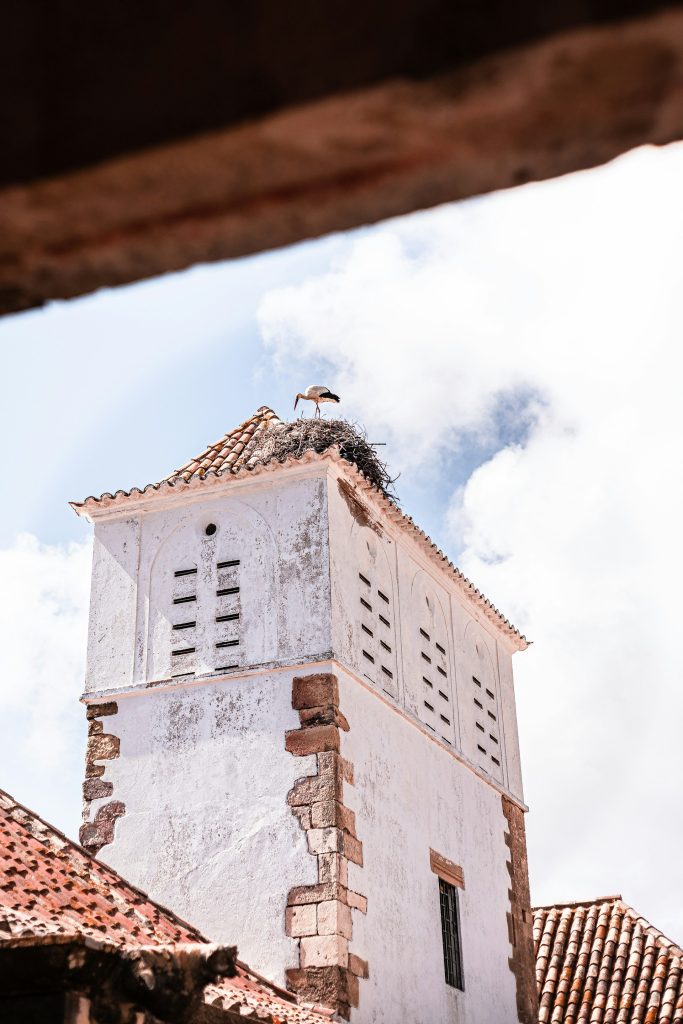
It’s not unusual to see a centuries-old whitewashed church topped with a nest the size of a small car (yes seriously!) and somehow the combination looks perfectly poetic.
The best places to spot storks in the Algarve
You can pretty much look up anywhere and find them, but certain towns are known for spectacular stork action:
Ferragudo
Your home turf, and one of the prettiest. You’ll see nests on chimneys, old facades, and along the cliffs.
Silves
The medieval castle views + storks = chef’s kiss. We were eating in Silves one day and one lovely stork decided to sing for hours. Their voices are unique, that is for sure! What an experience.
Lagos
Storks perched on bell towers create postcard-perfect moments.
Tavira
One of the biggest stork populations in the Algarve. The Roman bridge area is full of them.
Castro Marim Nature Reserve
A stork paradise — wetlands, salt flats, and dozens of nests.
Wherever you go, bring your camera. They’ll pose for you like pros.
Stork families: A sky-high love story
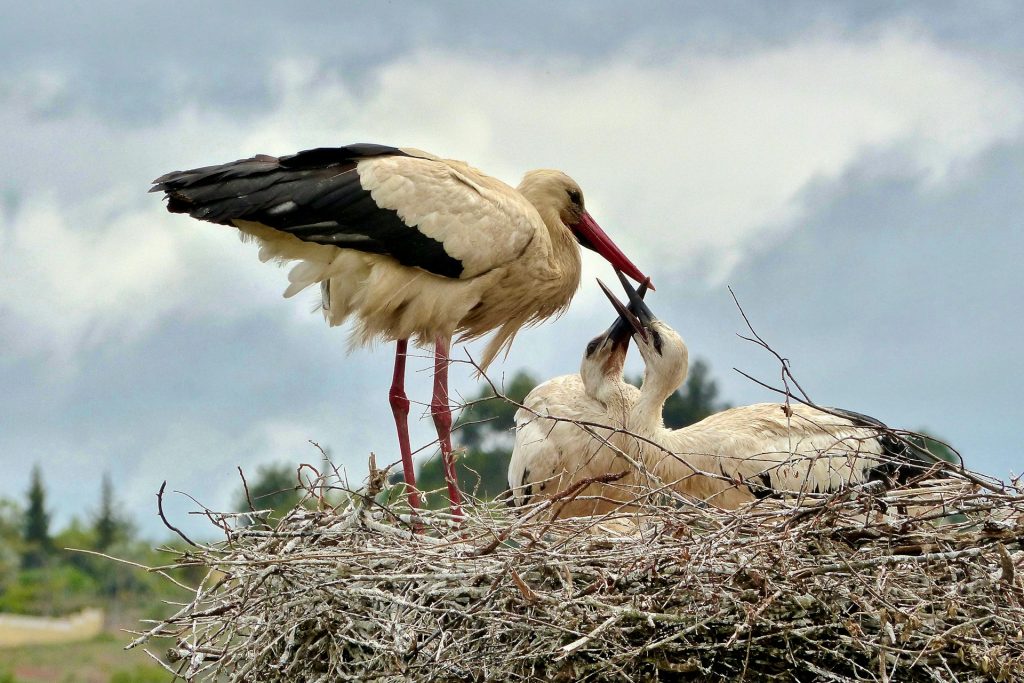
Storks are monogamous for life (adorable), raising 2–5 chicks each year. Watching the parents care for their babies is one of the Algarve’s sweetest natural spectacles.
From early spring to early summer, you’ll see:
- Parents taking turns feeding
- Fluffy chicks stretching their wings
- The occasional sibling squabble
- And eventually… the first wobbly flights
It’s nature drama at its finest — right above your head.
They’re protected… and deeply loved!
White storks are a protected species in Portugal, and locals are incredibly proud of them. Construction projects often work around active nests, and communities advocate fiercely to keep the colonies safe.
It’s part of why the Algarve feels so alive (and why we love it), humans and wildlife sharing space, literally rooftop to rooftop.
Why storks feel like the soul of the Algarve
Maybe it’s because they return to the same home year after year…
Maybe it’s the way they create a silhouette against the soft Algarve sky…
Or maybe it’s just the wonder of watching a bird so big and so wild build a life right in the center of our towns.
Whatever the reason, storks have become symbolic here, a reminder that even in a modern world, nature still claims its place.
And honestly? The Algarve wouldn’t feel the same without them.
Planning a trip? Don’t forget to look up.
Whether you’re strolling the old streets of Ferragudo, crossing the Roman bridge in Tavira, or wandering through Silves at sunset, storks will greet you like locals who’ve been here longer than anyone.
Once you start noticing them, you’ll join the rest of us in cheering when you spot a new nest or a parent swooping home with dinner.
They’re not just birds — they’re part of the Algarve story.
Leave a Reply